
What Is Data Extraction Software?
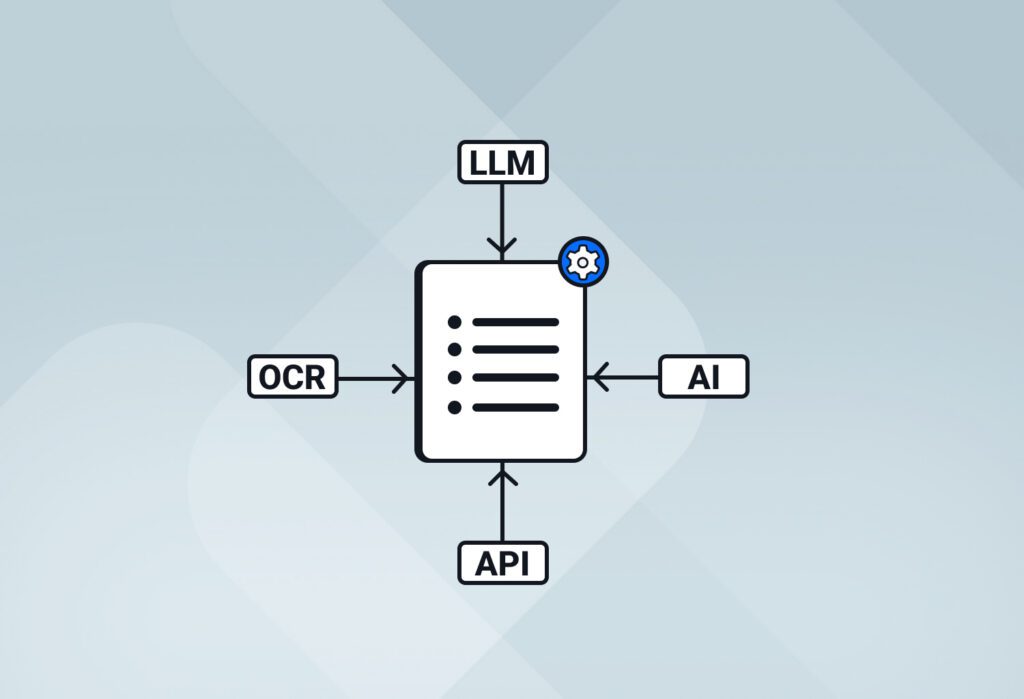
Data extraction software is a software tool that can identify and extract information from sources such as documents, images, emails, websites, databases, forms, shared drives, APIs, etc.
Data extraction tools convert structured, semi-structured, and even unstructured data sources into structured, accurate data. This allows businesses to centralize, organize, store, access, and analyze data with little to no manual input.
As a result, people can save countless hours of painstaking data entry and focus on tasks that actually move the needle for the business.
Why Data Extraction Software Is Essential in 2026
Manual processes hardly keep up when data volume and complexity grow. Data entry, in particular, does more damage than slowing down daily operations; it causes data errors that incur high costs. A 2025 study by IBM found that a quarter of organizations lose more than $5 million annually due to poor data quality.
Data extraction software has already become a core part of modern automation stacks. Here is why you should use it in 2026:
- Save time and effort by eliminating manual data entry
- Improve data accuracy — assuming your tool is set up properly
- Reduce document and email processing costs
- Streamline workflows by moving data to your systems easily
- Grow your business without a heavier data processing workload
- Feed accurate data into your BI tools to surface better insights
Best Data Extraction Software for Faster Workflows
In 2026 and beyond, automated data extraction can make all the difference between slow, error-prone processes and streamlined workflows. If you are looking to invest in data extraction software, we have selected 9 tools to consider and try out:
1. Docparser
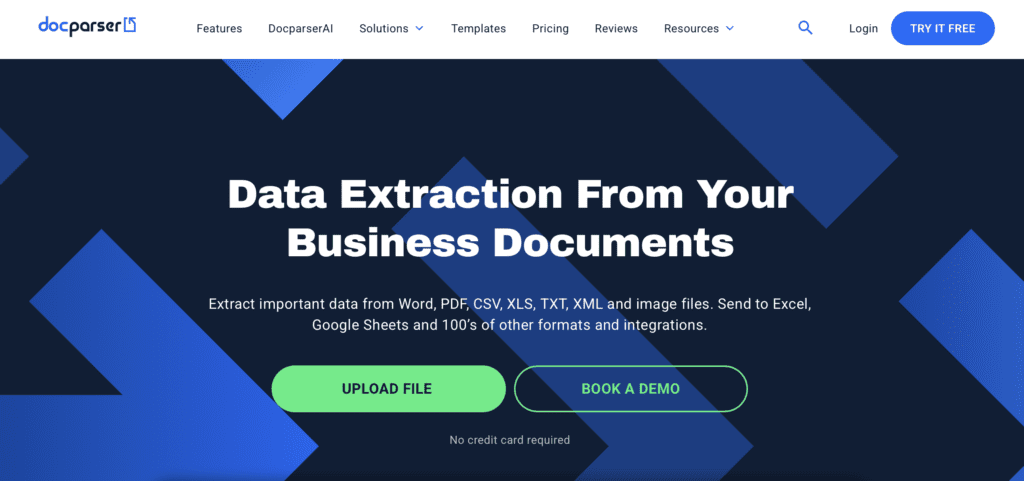
Docparser is a leading cloud-based document processing solution that pulls data from documents in bulk using OCR, AI, and other parsing technologies. Users can download parsed data to Excel, CSV, JSON, and XML, or send it where it needs to go: spreadsheets, databases, CRMs, accounting software, cloud apps, APIs, etc.
Common use cases include parsing invoices, purchase orders, bank statements, scanned documents, forms, etc. Users use Docparser to build automated workflows for invoice processing, lead management, and a lot more.
“The information that I was scraping was very tricky for similar products to scrape accurately. I was very pleased to find out that Docparser gave me the control to scrape my PDFs in unique ways to get as much of the information off as possible. It was easy to use and absolutely perfect for what I needed it for.”
—Teresa M., Office Manager.
Docparser was featured on the 2026 recognition list of Software Advice, in the “Best Customer Support” category.
Key features
- Customizable parsing rules
- OCR and other parsing technologies
- Template library
- Support for multiple document formats
- Download data in multiple formats (PDF, Word, CSV, XLS, TXT, XML, image files)
- DocparserAI: AI-powered parsing engine that automates the setup process and provides new capabilities, namely resume parsing, checkbox extraction, handwriting recognition, and content summarization
- Integrations with 1,500+ cloud apps
- Unlimited downloads and integrations on all tiers
- Webhooks and API access
- Secure data processing
Pricing
You can sign up for a 14-day free trial and access all core features. Our Starter plan is priced at $32.50/ month (less if you go with annual billing), with higher tiers providing more parsing credits and adding features.
Best for: Businesses that process documents and need a solution to capture data and streamline workflows.
2. Mailparser
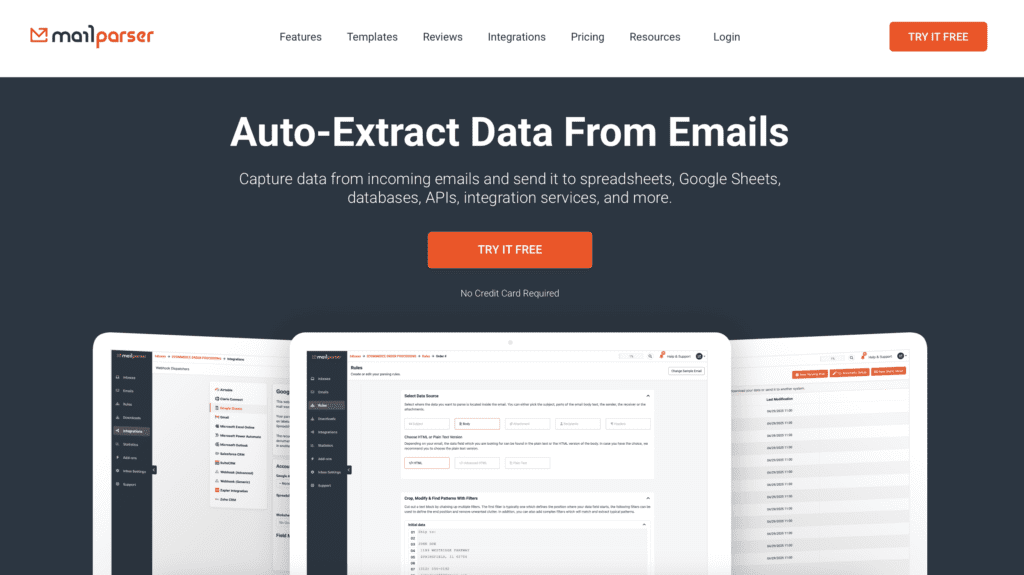
Docparser’s sister company, Mailparser, is a no-code email parsing tool that helps you extract data from an email, including attachments, and automatically export it into a sheet, cloud app, or API.
Professionals often lose too much time looking for information in their inboxes and inputting it where it needs to be. Mailparser solves this problem by capturing data from emails and exporting it to systems, helping teams save time, improve accuracy, and streamline workflows.
“I have used it in Zaps to automate lead data entry, solicit customer reviews, and more. I can achieve the automations much more affordably with Mailparser than I can with competing single-purpose solutions.”
— Joel H., Senior Marketing Manager
Key features
- Email and attachment parsing (supports several file formats)
- Customizable parsing rules
- Download data in multiple formats
- 1,500+ Integrations with cloud applications
- Unlimited downloads and integrations on all tiers
- Email filtering and routing
- Webhooks and API access
- Secure data processing
Pricing
Mailparser has a 30-day free trial that gives you access to all core features. Pricing starts at $29.95/month and includes several tiers based on email volume, with some paid add-ons included for free in the highest tiers.
Best for: Extracting data from emails and automating workflows that depend on accurate email data.
3. Nanonets
Nanonets is another document extraction tool that uses machine learning to recognize handwritten text, text images, images with low resolution, and more. You can digitize documents, extract data fields, and integrate with apps or APIs to automate workflows.
Teams use it to reduce manual data entry, improve accuracy, and streamline operations. Extracted data can be validated, routed through approvals, and integrated with ERPs, databases, or other business tools via APIs.
Key features
- AI-based data extraction models
- Multi-format document support
- OCR and handwriting recognition
- Pre-trained models for common use cases
- Optional approval process
- Workflow automation tools
- Continuous model improvement
- Integrations with ERPs, databases, apps, and APIs
Pricing
Nanonets uses a usage-based pricing model with free starting credits, where costs scale based on document volume and workflow “blocks” used. Higher tiers offer volume discounts, along with advanced AI features, integrations, and enterprise capabilities.
Best for: Organizations that need flexible, AI-powered document automation at scale, rather than strict rule-based extraction for standardized formats.
4. Parseur
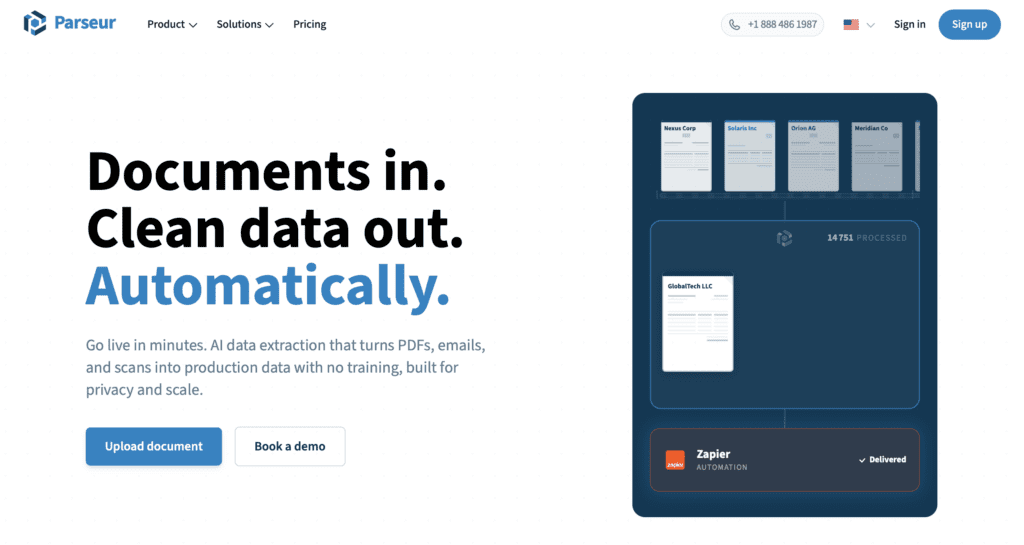
Parseur is a cloud-based data entry automation software specialized in document parsing. Like the apps above, it automates your entire data entry workflow by pulling text from documents, emails, and attachments and sending it to a database or application.
It is often used for automating email-driven workflows such as lead capture, order confirmations, shipping notifications, and forms. Teams rely on it to quickly convert emails and attachments into structured data that can be sent to CRMs, spreadsheets, or other business tools.
Key features
- Email and document parsing
- Dynamic OCR
- Template-based data extraction
- AI-powered data extraction
- Export to multiple formats
- Integrations with cloud apps
- API and webhook integrations
Pricing
Parseur has a free tier that lets you parse up to 20 pages per month. Paid plans add more credits and users, and unlock features like advanced post-processing, API access, longer retention, and integrations for workflows that handle more data.
Best for: Businesses that need combined email and document parsing in one tool.
5. Octoparse
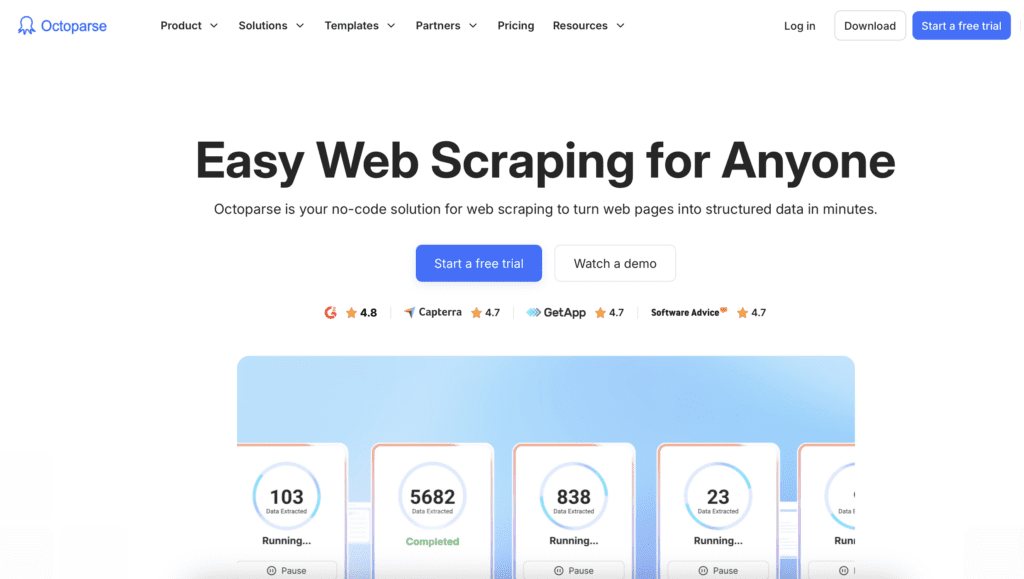
Octoparse is another cloud-based web data extraction service. Using a point-and-click interface and no coding, users can scrape data from any website and turn it into a structured spreadsheet. Octoparse only extracts data from websites, though, not documents.
It is typically used for web data collection tasks such as competitor price monitoring, lead generation, market research, and e-commerce product scraping. It allows users to automate the extraction of large volumes of public web data without needing technical skills.
Key features
- No-code visual scraping interface
- Cloud-based and local extraction models
- Pre-built scraping templates
- Scheduled automation workflows
- Pagination and dynamic content handling
- IP rotation and anti-blocking features
- Data export to CSV, Excel, JSON
- API access for automation
Pricing
Octoparse offers a free plan with limited scraping capacity. Paid plans start at around $83/month and scale based on cloud extraction limits, automation features, and concurrent cloud processes needs, with higher tiers designed for larger-scale scraping operations.
Best for: Non-technical users who need to extract data from websites at scale.
6. Parsehub
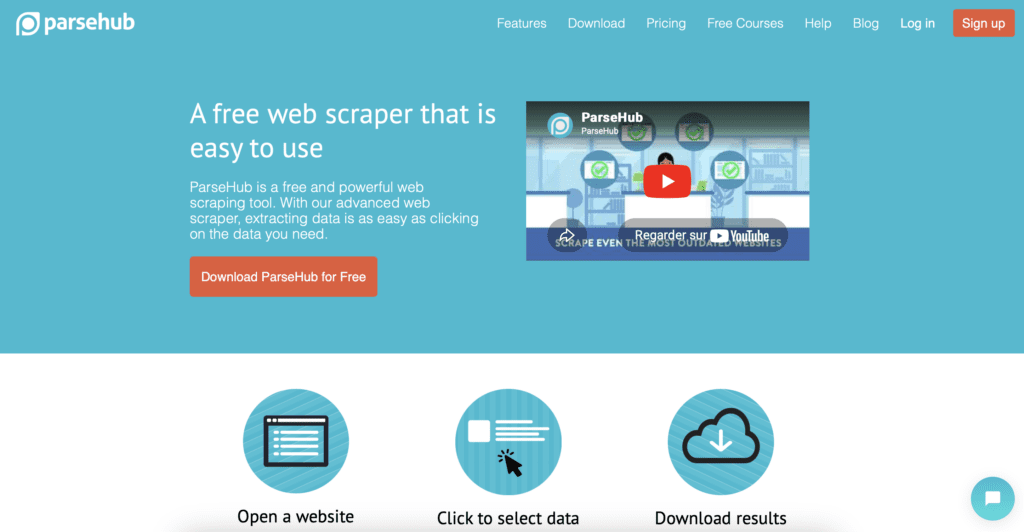
Parsehub is a web scraper data extraction tool that allows you to extract data from any website. All users need to do is open a website, click to select data, and download their results through JSON, Excel, and API. Keep in mind that Parsehub only extracts data from websites and not documents.
It is often used for extracting structured data from complex or dynamic websites, including directories, listings, and e-commerce pages. Businesses use it for market research, competitor analysis, and building datasets from websites that require multi-step navigation.
Key features
- Visual point-and-click scraper
- Handles JavaScript-heavy websites
- Cloud-based scraping engine
- API access for automation
- Scheduling and recurring runs
- Pagination and multi-step navigation
- Data export in multiple formats
- Advanced extraction logic support
Pricing
Parsehub offers a free plan with limited projects and runs. Paid plans start at $189/month and add more data extraction speed, projects, support, and more.
Best for: Companies that need to extract data from complex or dynamic websites without writing code.
7. Web Scraper
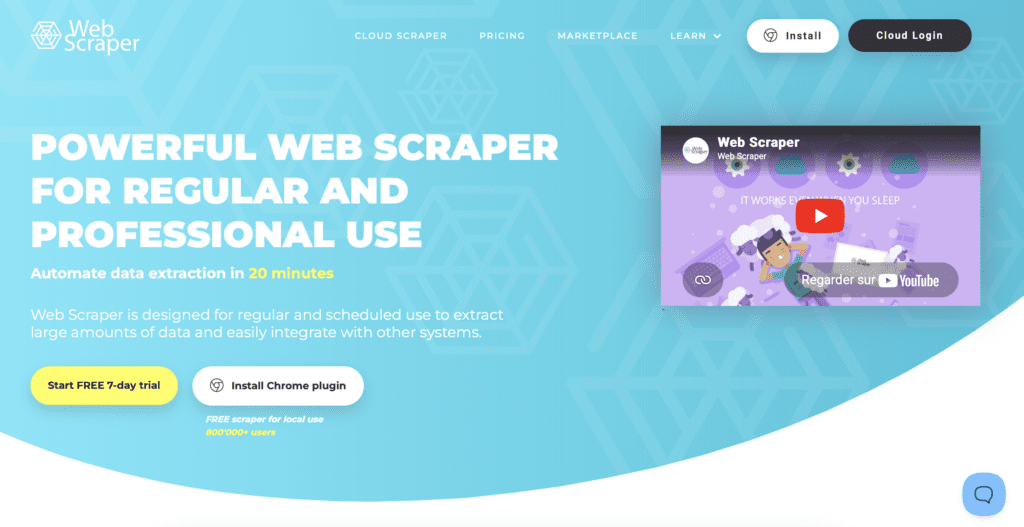
Web Scraper is another of the web scraping tools that can extract data from websites with multiple levels of navigation using a modular selector system. Users can export this data in CSV, XLSX, and JSON formats or access it via API, webhooks, or to Dropbox, Google Sheets, or Amazon S3.
It is commonly used for building custom scraping workflows directly in the browser, especially for collecting structured data from multi-page websites. Typical use cases include pulling product data, directories, listings, and other publicly available web information.
Key features
- Browser extension-based scraping
- Sitemap and selector configuration
- Multi-level navigation support
- Data export to CSV, JSON, XLSX
- Cloud scraping options
- Integration with Dropbox, Google Drive, Google Cloud, Google Sheets, Microsoft Azure, and Amazon S3
- Scheduled scraping workflows
- Support for dynamic page structures
Pricing
Web Scraper offers a free browser extension with basic features. Paid plans start at $50/month and scale based on scraping capacity, automation features, and workflow complexity.
Best for: Users looking for a flexible web scraping solution with visual setup.
8. Mozenda
Mozenda is a cloud-based web scraping service that allows you to pull information from web pages. Users can extract data from website text, files, images, and PDF content with their point-and-click feature. Then, users can export directly to TSV, CSV, XML, XLSX, or JSON through their API.
It is primarily used in enterprise environments where large-scale, ongoing web data extraction is required. Teams typically use it for structured data collection across multiple websites, centralized data aggregation, and integrating extracted data into business intelligence systems.
Key features
- Enterprise-grade scraping platform
- Cloud-based data extraction infrastructure
- Workflow automation and scheduling
- Data transformation tools
- API integrations for systems
- Scalable multi-project management
- Large-scale data processing
- Centralized data management system
Pricing
Mozenda uses custom pricing based on enterprise needs. Plans scale with data volume, automation requirements, and team size, with scalable infrastructure for large-scale web data extraction.
Best for: Enterprises that need scalable, managed web data extraction across multiple large projects.
9. Docsumo
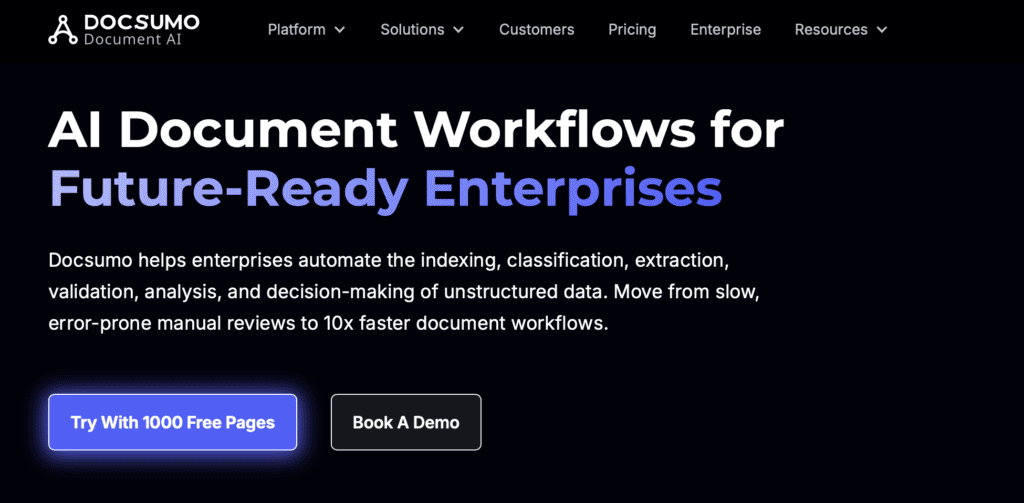
Docsumo uses intelligent document processing technology to convert unstructured data from CSV, JSON, and XML to software like QuickBooks, Xero, and Tally. This tool helps businesses of all sizes extract data from documents.
It is commonly used for automating complex document workflows such as invoice processing, financial document handling, and large-scale data extraction across business systems. It helps teams turn unstructured documents into structured, validated data that can be directly used in accounting and operational tools.
Key features
- AI-powered document extraction
- OCR for scanned documents
- Multi-document support
- Document classification and sorting
- Workflow automation with agentic extraction
- Data validation and accuracy checks
- API and integration support
- Automated processing pipelines
Pricing
Docsumo offers a free trial with up to 1,000 pages of parsing. Paid plans scale based on document volume and automation requirements, with higher tiers adding advanced AI features, integrations, and enterprise-grade processing capabilities.
Best for: Teams that need large-scale document processing with AI-driven extraction and classification.
Automated Data Extraction FAQ
What is the best data extraction software for PDFs?
Docparser is one of the best tools for extracting data from business documents (whether PDF, Word, images, or other formats) and sending it to your systems to automate workflows end-to-end.
Is data extraction software the same as web scraping tools?
Not exactly. Web scraping tools focus specifically on extracting data from websites, while data extraction software focuses more on extracting data from other sources like documents, emails, APIs, etc.
How does automated data extraction work?
Automated data extraction relies on various methods to work its magic. Most tools use a rule-based system where the user sets up instructions for the tool to identify and extract data. Going a step further, many solutions provide templates with pre-set rules for specific use cases. Today, AI is used to extend the range of capabilities and train data extraction models. The best solutions use a combination of these methods to improve accuracy and cover a wider range of use cases.
What are the benefits of using data extraction tools?
Data extraction tools solve the problem of spending hours entering data manually and running behind on important tasks. They also improve data accuracy, speed up workflows, and unlock scalable automation across business processes.
Can ChatGPT scrape data from a PDF?
Tools like ChatGPT can extract data from a structured PDF file, but they can make mistakes when processing complex documents and are difficult to scale. Plus, you might have to clean up your documents beforehand, write a script to use in the prompt, or use other tools in combination with ChatGPT. For your recurring needs, it’s far more reliable and efficient to use dedicated data extraction software. You’ll get accurate data that moves seamlessly to your databases and systems.
In Conclusion
Data extraction software eliminates manual processing, enabling faster workflows. People no longer have to spend a tremendous amount of time inputting information by hand. This results in higher data accuracy, more time for high-ROI activities, and scalable operations.
Choosing the right data extraction tool for your business ultimately depends on your specific needs and budget. First, you should identify inefficient processes and evaluate their cost. Then, choose a tool that suits your use cases, is user-friendly, and integrates with your systems. The right tool will unlock end-to-end workflow automation, resulting in unprecedented efficiency gains.
Want to test the efficiency of data extraction software right now? You can get started with a Docparser free trial. Upload a document you often process, like an invoice, and build your first parser in just a few minutes — no coding involved. Once you see how Docparser turns documents into structured data at scale, you’ll never go back to manual data entry again.