
What Is a Bill of Lading?
A bill of lading (often abbreviated as BoL or B/L) is a document that carriers use in domestic and international shipping as proof of shipment, a receipt of goods, a contract of carriage, and a document that defines ownership.
Businesses use bills of lading to document goods, protect all parties legally, and ensure accurate delivery throughout the shipping process.
Bill of lading example
Here is an example of what a bill of lading looks like:
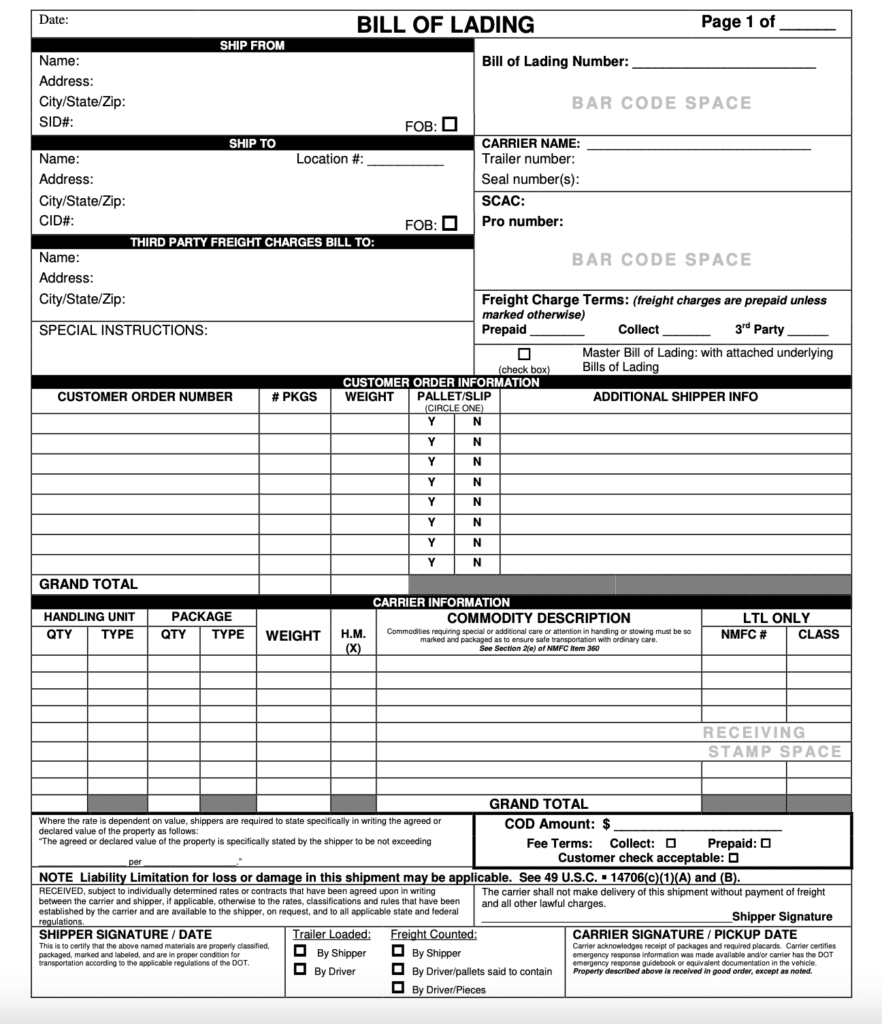
This freight bill of lading template can be downloaded from this website: NTS Logistics.
Who issues a BoL?
The party that issues a BoL is the carrier, meaning the company responsible for transporting the goods to their destination, whether by sea, air, or land (rail or road). This may be a shipping company or a freight forwarder.
The carrier should not be confused with the shipper, which is the company sending the goods.
Note that the carrier will typically issue multiple copies of a BoL to the parties involved. Which leads us to the next question…
Who receives a BoL?
Multiple parties receive a BoL from the carrier:
- The consignee is the primary recipient of the BoL. They present their copy to claim the goods upon their arrival at the destination.
- The shipper also receives a copy of the BoL for their records. It acts as proof that the goods have been loaded.
- The carrier retains a copy as well as proof of contract and receipt of goods.
- When involved, a freight forwarder or logistics provider will receive a copy of the BoL as proof of shipment as well as for recordkeeping, tracking, and coordination.
What Is the BoL Used For?
A B/L serves four key functions in shipping:
- Proof of shipment: Confirms that goods have been received by the carrier.
- Receipt of goods: Details what was shipped and in what condition.
- Contract of carriage: Outlines the terms between shipper and carrier.
- Document of title: Determines who owns the goods and can claim possession of them.
In short, it helps all parties involved stay aligned on what is being shipped, where it’s going, and who owns it at each stage.
Understanding The Types of Bills of Lading
Bills of lading come in several types, including straight, order, bearer, inland, ocean, negotiable, and non-negotiable. Each type defines how goods are delivered, who can claim them, and whether ownership can be transferred during shipment.
Straight bill of lading
A straight bill of lading is issued to a specific consignee, meaning the goods can only be delivered to the named recipient, and the document cannot be transferred to another party. It is non-negotiable.
Typically, shippers typically use straight BoLs when the customer has already paid for the goods or when they do not need to transfer ownership during transit.
Order bill of lading
An order bill of lading allows parties to transfer ownership of goods through endorsement. The consignee can sign the document to pass ownership to another party. As a result, businesses widely use this type in international trade because it provides flexibility in ownership and payment arrangements.
Bearer bill of lading
A bearer B/L allows whoever physically holds the document to claim the goods. Ownership is transferred simply by handing over the document, without the need for endorsement. However, it carries a higher risk if lost or stolen, so it is used less frequently and typically in situations where that level of flexibility is required.
Inland Bill of Lading
Shippers use an inland bill of lading for domestic transportation, typically by truck or rail. It covers the movement of goods within a single country, often as part of a larger international shipment.
As a result, this bill of lading form helps logistics teams track and handle goods during land-based transit before they reach ports or distribution centers.
Ocean Bill of Lading
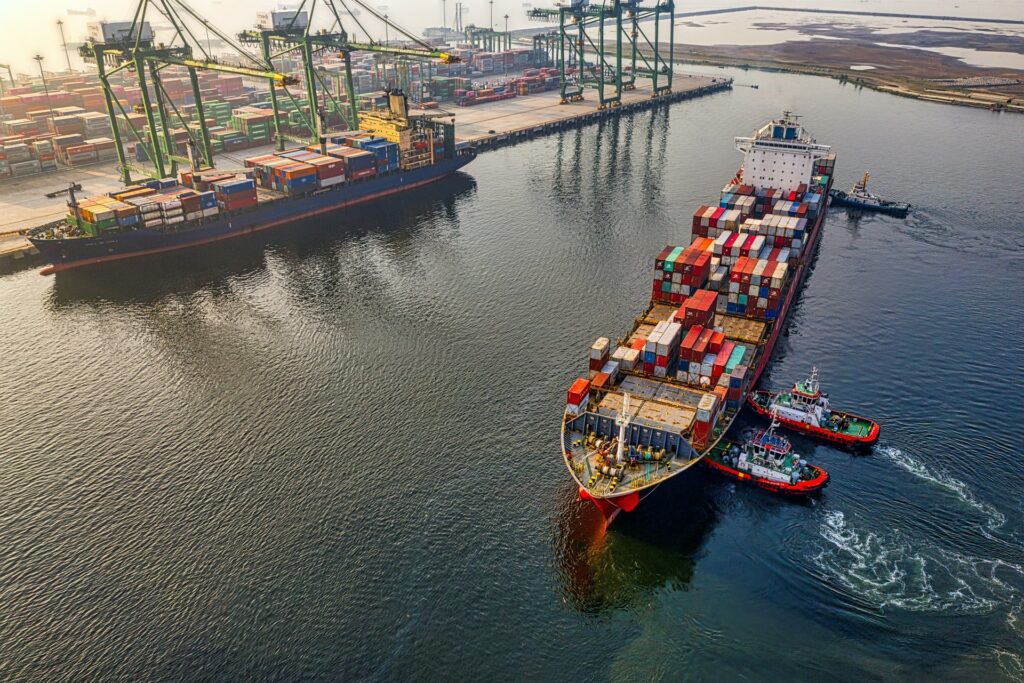
Carriers use an ocean bill of lading for goods transported by sea, especially in international shipments. It acts as a contract between the shipper and carrier, a receipt of goods, and a document of title. Therefore, businesses rely on this type for cross-border trade and often need it for customs clearance and port operations.
Negotiable Bill of Lading
A negotiable bill of lading allows parties to transfer ownership of goods from one party to another through endorsement and delivery of the document. Because of this, it is a common choice in global trade, especially when goods are sold while in transit or used in financing arrangements.
Non-negotiable Bill of Lading
In this case, carriers issue a non-negotiable bill of lading to a specific consignee and do not allow ownership transfer to another party. This keeps ownership fixed throughout the shipment. As a result, this type of B/L ensures a secure delivery process, as carriers release the goods only to the designated recipient.
What Information Is Included in a Bill of Lading?
Bills of lading contain all the information needed by the parties involved, such as the shipper and consignee details, carrier information, description of the goods delivered, shipment date, delivery terms, and signatures, to mention a few.
A BoL includes the following information:
- Bill of lading number
- Shipper and consignee details
- Carrier information
- Date and place of issue
- Description of goods being shipped
- Quantity, weight, and packaging details
- Port of discharge and port of landing
- Shipment date and tracking/reference number
- Freight terms (prepaid or collect)
- Special instructions
- A note for commodities that are designated as Department of Transportation hazardous materials
- Signatures
This information ensures transparency and provides a reliable record for all parties involved in the shipment.
Why Are BoLs Important?
Bills of lading are important because they provide legal protection, reduce disputes, prevent theft, ensure compliance with regulations, and guarantee accurate tracking and delivery of goods.
They determine who owns the goods at each stage of the shipment process and when ownership is transferred from one party to another. As a result, this prevents, or at least reduces, misunderstandings between shippers, carriers, and consignees.
In addition, bills of lading prevent cargo theft, which is a bigger issue in commerce than one would imagine. Indeed, the consignee must present the bill of lading form to the carrier in order to claim the goods. Similarly, the carrier is legally obligated to deliver the goods only to the consignee named on the BoL. Together, these safeguards help prevent bad actors from claiming or redirecting cargo.
Furthermore, many countries require bills of lading to be presented during customs clearance, so they are essential for complying with legal and regulatory requirements.
Finally, bills of lading play a vital role in ensuring that goods are trackable and delivered correctly and on time.
Struggling to Process Bills of Lading? Try Docparser
If you work with bills of lading in your day-to-day tasks, you’ve probably encountered some challenges while processing them. For instance, typing B/L information into a shipping management software and making sure that no errors fell through cracks can be a long, sometimes stressful process.
In fact, manual BoL processing can cause delays, mistakes, misunderstandings, and even demurrage and detention fees. By switching from manual data entry to automated data capture, your team saves time, reduces processing costs, and prevents problems from occurring.
Whether you handle paper or electronic bills of lading, you can use Docparser to convert them to structured data and then export that data to your transportation management system.
To get started, we have a BoL template you can use to build your parser. Sign up for a free trial, upload a bill of lading, and set up your parser to automate data entry, save countless hours of work, and prevent costly errors.